
Let's cut straight to it: hiring a UX agency in Europe typically costs between €15,000 and €150,000 depending on what you're building.
A simple landing page might run €8,000–€20,000. A complete mobile app design? Expect €30,000–€80,000. Building a full SaaS product with extensive research and testing? You're looking at €80,000–€200,000+.
But here's what nobody tells you upfront: the quoted price is rarely the final price. Hidden costs, scope changes, and those "just one more revision" requests can add 15–30% to your budget.
This guide gives you the complete picture—not just the optimistic quotes agencies lead with, but what projects actually cost in the real world. We've analyzed pricing from 100+ European agencies, reviewed actual project invoices, and talked to dozens of founders who've been through this process.
You'll learn:
- Exact price ranges for every type of UX project (from audits to enterprise SaaS)
- Why a Berlin agency charges €120/hour while a Warsaw agency charges €60/hour (and why both might be good choices)
- The hidden costs that surprise first-time buyers
- How to tell if a quote is fair—or if you're being ripped off
- Real examples with actual budgets and results
Whether you're a bootstrapped startup watching every euro or an established company with budget to spend, this guide will help you make a smart decision.
Want real numbers?
Calculate your UX project cost in 30 seconds. Based on verified European agency rates.
Detailed Price Breakdown by Project Type
"It depends" is the most frustrating answer in business. While every project is unique, we can provide specific price brackets based on 2025–2026 market data.
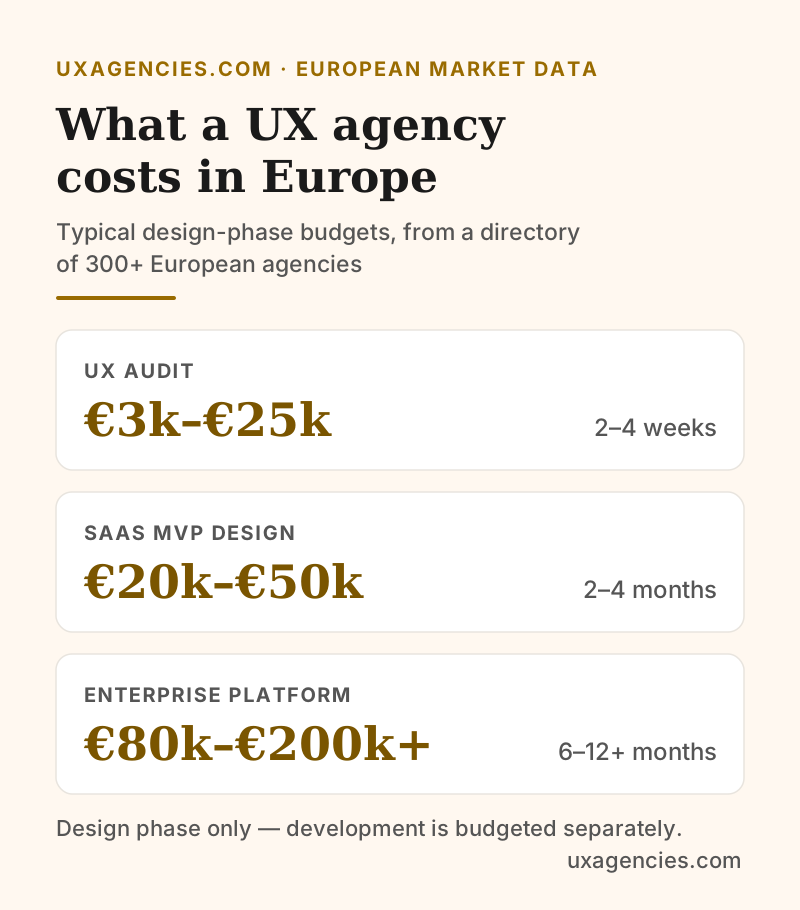
These ranges cover the design phase only (UX research, strategy, UI design, prototyping). Development is typically a separate cost, though some full-service agencies will bundle them.
| Project Type | Budget Range | Typical Timeline | What's Typically Included |
|---|---|---|---|
| UX Audit | €3,000 – €25,000 | 2–4 Weeks | Heuristic evaluation, accessibility check (WCAG), user flow analysis, prioritized fix list, quick-win recommendations. See the full UX audit cost breakdown. |
| Landing Page | €3,500 – €10,000 | 2–4 Weeks | Strategy, copywriting assistance, high-fidelity UI, mobile optimization, basic animations, dev handoff. |
| Simple Mobile App | €15,000 – €30,000 | 4–8 Weeks | MVP focus (10-20 screens), core flows, basic clickable prototype, design system (lite). |
| Complete Mobile App | €30,000 – €80,000 | 3–5 Months | Full scope (40-80 screens), deep user research, advanced prototyping, custom illustration/motion, extensive testing. |
| SaaS MVP (Web) | €20,000 – €50,000 | 2–4 Months | Core platform features, dashboard design, user onboarding flows, component library, responsive layouts. |
| E-commerce Redesign | €25,000 – €75,000 | 3–5 Months | Conversion strategy, product pages, checkout optimization, mobile-first design, search experience. |
| Corporate Website | €25,000 – €60,000 | 3–4 Months | 15-50 pages, information architecture, CMS strategy, custom illustrations/assets, SEO-driven structure. |
| Enterprise Platform | €80,000 – €200,000+ | 6–12+ Months | Legacy system modernization, multi-role workflows, complex data viz, design system governance, extensive testing. |
Why the Massive Ranges?
You might wonder why a complete mobile app can cost €30,000 or €80,000. The difference isn't just "agency markup"—it's often a completely different product.
- The €30k App: Designed by 2 people (Mid-level Designer + PM). Limited research (maybe a competitor audit). You provide the wireframes or rough sketches. 2 rounds of revisions. Standard iOS/Android components.
- The €80k App: Designed by a team of 4 (Lead, Researcher, UI Designer, Motion Designer). Starts with 3 weeks of user interviews to validate the concept. Includes custom illustrations, unique micro-interactions, and a bespoke design system. Tested with real users before a single line of code is written.
Building an app rather than a website?
See our dedicated mobile app cost guide for Europe for a full breakdown by complexity, region, and tech stack — or run the numbers in the calculator tool.
Regional Price Differences in Europe
Geography is the single biggest factor in agency hourly rates. In 2026, the quality gap between Western and Eastern Europe has narrowed significantly—Polish and Ukrainian developers are world-renowned—but the price gap remains due to cost of living.
These hourly benchmarks come from our European UX Agency Rate Index, computed from 300+ listed agency rate ranges and refreshed continuously.
Western Europe (United Kingdom, Netherlands, Germany, Switzerland)
- Typical Rates: €100–150/hr
- Why pay this: You need physical proximity for workshops, culturally specific local knowledge, or rigorous GDPR/compliance expertise. London agencies command the highest premiums (often €120+/hr).
- Best for: Corporate HQs, highly regulated industries (fintech/health), projects requiring heavy in-person collaboration or stakeholder management.
- Browse agencies: London · Amsterdam · Berlin · Zurich
Northern Europe (Sweden, Denmark, Norway)
- Typical Rates: €110–175/hr
- Why pay this: The "Scandinavian Design" premium is real. These agencies are world-leaders in minimalism, sustainability-focused design, and flat hierarchies. They often prioritize consensus and thorough process.
- Best for: Premium consumer brands, sustainability tech, design-led startups where brand aesthetic is everything.
- Browse agencies: Stockholm · Copenhagen · Helsinki
Southern Europe (Spain, Portugal, Italy)
- Typical Rates: €75–100/hr
- Why pay this: A growing sweet spot. Barcelona and Lisbon are booming tech hubs with vibrant creative cultures but significantly lower overhead than London or Zurich.
- Best for: Creative-heavy projects, lifestyle brands, startups needing Western timezones and culture at better rates.
- Browse agencies: Barcelona · Lisbon · Milan
Eastern Europe (Poland, Romania, Czech Republic, Ukraine)
- Typical Rates: €55–75/hr
- Why pay this: The best value-for-money ratio globally. Polish developers ranked #3 worldwide (and #1 in Java) in HackerRank's developer skills benchmark. English proficiency is excellent, and the work ethic is intense.
- Best for: SaaS, complex technical products, startups, scale-ups needing to stretch budget without sacrificing quality.
- Browse agencies: Warsaw · Prague · Budapest
Let's look at the math:
- A 500-hour project in London (€112/hr) = €56,000
- The same 500-hour project in Warsaw (€55/hr) = €27,500
Savings: €28,500 (51%) for comparable technical quality.
What Actually Affects Costs? (Beyond Geography)
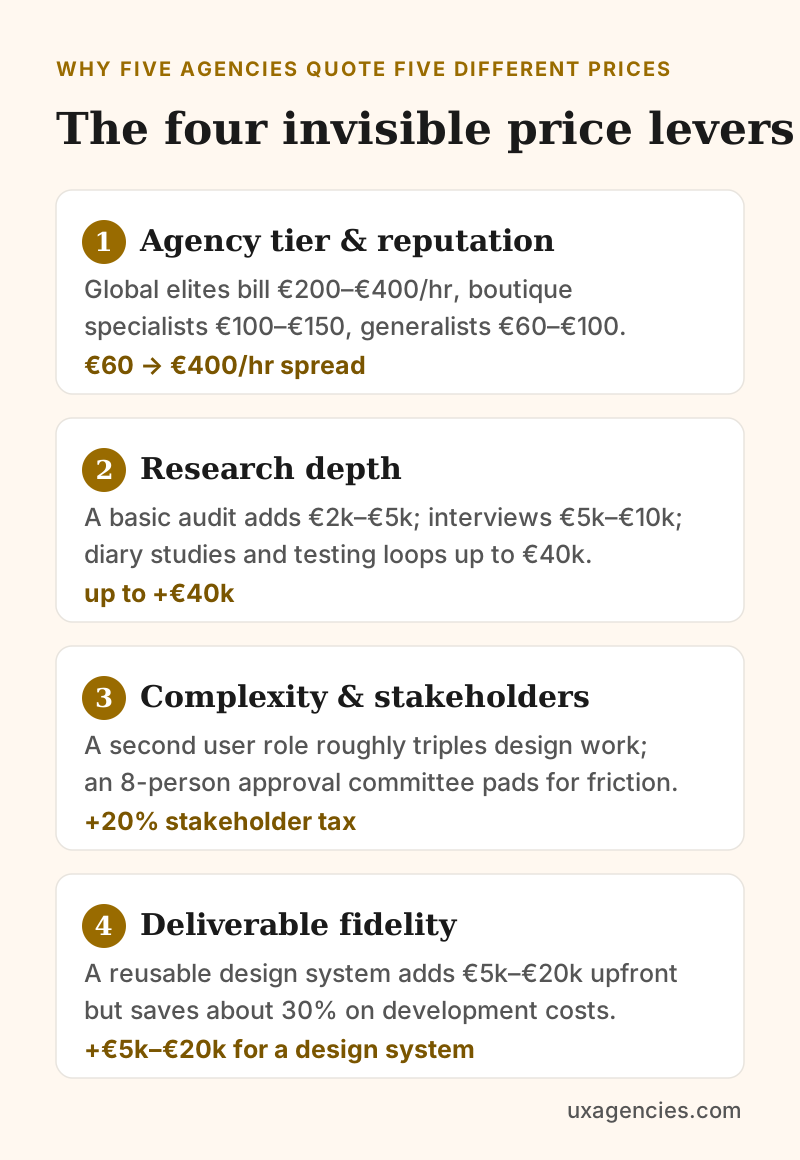
If you send the same brief to five agencies in the same city, you'll still get five different quotes. Why? Here are the invisible levers that drive the price up or down.
1. Agency Tier & Reputation
- Global/Elite Agencies (e.g., Ideo, Frog): You are paying for the brand name, the safety of "nobody gets fired for hiring X," and their proprietary processes. Rates: €200–€400/hr.
- Boutique Specialists: High expertise in one niche (e.g., Fintech UX or Healthtech). They work faster because they know the regulations, but they charge for that knowledge. Rates: €100–€150/hr.
- Generalist Shops: "We do everything." Good for standard marketing sites where deep industry knowledge isn't critical. Rates: €60–€100/hr.
2. Research Depth (The Invisible Cost)
This is the most common place clients try to cut costs, and it's usually a mistake.
- Level 1 (Basic): Reviewing your analytics and doing a heuristic audit of competitors. (+€2k–€5k)
- Level 2 (Standard): Interviewing 5-10 stakeholders and current users to validate assumptions. (+€5k–€10k)
- Level 3 (Deep): Diary studies, field research, and extensive usability testing loops. (+€15k–€40k). Note: This depth pays off—McKinsey found design-led companies that continually test with users grew revenue 32% faster than peers over five years.
3. Complexity & Stakeholders
Price multipliers aren't linear.
- User Roles: Adding a second user role (e.g., "Admin" vs. "Customer") doesn't double the work—it triples it, because you have to design the interactions between them.
- Stakeholder Tax: If an agency knows they have to present to a committee of 8 executives, they will pad the budget by 20% for "project management friction." Approvals take longer, and conflicting feedback requires extra meetings to resolve.
4. Deliverable Fidelity
- Low-Fi: Wireframes and flowcharts. Good for logic checks. Cheaper.
- High-Fi: Pixel-perfect designs ready for code. Standard.
- Interactive Prototypes: Clickable models that feel like real apps (using tools like ProtoPie). Essential for testing but time-consuming to build.
- Design Systems: Creating a reusable library of components (buttons, forms, cards). Adds €5k–€20k upfront but saves 30% on future dev costs.
💡 Pro Tip
If you're pre-Seed, you probably don't need a robust Enterprise Design System yet. Ask the agency to create a "Lite" style guide instead to save €5k–10k.
The Hidden Costs Nobody Warns You About
When you sign a contract for €40,000, you might end up paying €55,000. Here is where the extra money goes—and how to spot it coming.
1. Scope Creep & "Minor" Changes
Agencies typically include 2 rounds of revisions per deliverable. If you change your mind about the navigation structure after the UI is designed, that's a change order. Cost: €100–€150/hour.
2. User Testing & Recruitment
The design fee often covers the analysis of tests, but not the recruitment or incentives for participants. Paying 10 users €50 each plus using a platform like UserTesting.com adds up quickly. Cost: €1,000–€5,000 extra.
3. Assets and Licenses
Who pays for the custom font license? The stock photography? The illustration pack? Usually you. Commercial font licenses for web/app use can be surprisingly expensive. Cost: €500–€5,000.
4. The "Rush" Fee
Need it 2 weeks earlier? Expect a 20–50% premium for the agency to work nights/weekends or pull staff off other accounts.
5. Developer Handoff Gaps
If the agency just throws Figma files at your developers and walks away, you're in trouble. You may need to pay for extra "implementation support" hours where designers sit with devs to tweak padding, animations, and responsive behavior during the build. Cost: 10–15% of total budget.
⚠️ Warning: Always keep a 15–20% contingency fund on top of the quoted price. If the project is €50k, budget €60k. You will likely need it.
Pricing Models: Which One Should You Choose?
UX design agencies will usually propose one of these three models. Knowing the difference gives you negotiation power.
1. Fixed Price (Project-Based)
The Deal: "We will build X, Y, and Z for €45,000."
- Pros: Predictable budget. The agency takes the risk on efficiency. If they take longer, they eat the cost.
- Cons: Inflexible. If you learn something new halfway through and want to pivot, it requires a painful "Change Order" process.
- Best For: Well-defined projects (e.g., Marketing websites, simple MVPs) where you know exactly what you want and it won't change.
2. Time & Materials (Hourly)
The Deal: "We charge €100/hour and estimate it will take 400-500 hours."
- Pros: Maximum flexibility. You can shift focus instantly. You pay for exactly what you get.
- Cons: Scary for CFOs. The budget is an estimate, not a cap. If the project drags on, you keep paying.
- Best For: Exploratory projects, complex products with unknown technical constraints, or "Phase 2" work.
3. Monthly Retainer (Subscription)
The Deal: "Pay us €8,000/month for a dedicated team."
- Pros: No overhead of quoting every little task. The team becomes like an extension of your company. Predictable monthly burn.
- Cons: You pay even if you don't have work ready for them.
- Best For: Ongoing product improvement, post-launch optimization, long-term partners.
How to Get Accurate Quotes (And Avoid "Sticker Shock")
If you email an agency saying "How much for an app?", they will either ignore you or quote you €100k just to be safe.
To get a real number, you need a Request for Proposal (RFP). It doesn't have to be a 40-page document. It just needs:
- Project Context: Who are you? What is the business goal? (e.g., "Raise Series A," "Reduce churn by 10%")
- Scope: List the screens or pages. Be specific. "User Dashboard (5 screens: Home, Settings, Profile, Analytics, Reports)" is infinitely better than just "Dashboard."
- Budget Range: Yes, share your budget. If you have €30k and they cost €100k, you're both wasting time. Say: "We are targeting a budget between €25k–€40k."
- Timeline: When do you need to launch?
- Competitors: Who do you look up to?
Questions to Ask the Agency (read this article too):
- "What is strictly NOT included in this quote?"
- "Who will actually be doing the work? The seniors I'm talking to, or juniors?"
- "Can I speak to a past client who had a similar budget?"
- "What happens if we go over the revision limit?"
Real Examples: What Money Actually Buys
Let's look at 5 recent verified European case studies to see the correlation between spend and result.
Case Study 1: The "Quick Fix" That Printed Money
- Project: Checkout Optimization (Retail)
- Cost: ~€15,000 (Estimate for Audit + Redesign)
- The Story: A major retailer was losing customers at checkout. They hired a boutique agency to simplify the flow based on data, specifically removing forced account creation.
- The Result: According to Baymard Institute, large e-commerce sites can increase conversion rates by 35% solely through better checkout design. Additionally, removing forced registration alone can yield a 10–30% uplift in conversion.
- Lesson: You don’t always need a full redesign. Targeted UX surgery on high-leverage areas like checkout can have massive ROI.
Case Study 2: The SaaS Transformation (From Poland)
- Project: SEO Platform Redesign (SEOcrawl)
- Cost: ~€24,000 (via monthly subscription)
- The Story: SEOcrawl had a working product but felt their existing design was holding back growth and credibility. They hired Eleken to completely overhaul the UI and tighten the UX around core workflows.
- The Result: The product’s user base grew from 0 to 2,000 users post-launch, proving that high-end SaaS design doesn't require a six-figure deposit.
- Lesson: Retainers can be a cash-flow-friendly way to get enterprise-grade design.
Case Study 3: The Enterprise Overhaul (Illustrative)
- Project: B2B SaaS Enterprise Implementation
- Cost: €120,000 (5 Months)
- The Result: Post-launch, the company secured €14M in funding and saw support tickets drop by 72% because the product was finally intuitive.
- Lesson: For high-stakes rounds, design is an asset, not an expense. Reduced support costs alone can pay for the project in under a year.
Case Study 4: The Disaster (Cautionary Tale)
- Project: TinyPilot Website Redesign
- Initial Quote: $7,000 – $15,000
- Final Cost: $46,000+ (and 8 months of time)
- The Story: Founder Michael Lynch hired an agency without a strict scope. The agency kept "polishing" unimportant pages, used "80% done" updates to keep the client hostage, and billed for delays caused by their own team.
- Lesson: Never start without a defined scope. Never pay Time & Materials without a cap. If an agency says "we're almost done" for 3 months straight, fire them.
Case Study 5: The Fintech Win
- Project: Online Enrollment Flow
- The Story: A major financial institution redesigned their account registration form to reduce friction.
- The Result: Industry data shows that optimizing enrollment flows can nearly double completion rates (yield). In Fintech, where customer lifetime value is high, a 1% conversion improvement can mean millions in deposits.
- Lesson: In high-value verticals like fintech, the cost of the agency is often negligible compared to the revenue gain from a better funnel.
Ready to get quotes?
Use our template to get accurate, comparable quotes from agencies.
Red Flags: When to Run Away
Price Too Low (<€10,000 for a complex app) If a quote looks too good to be true, it is. They are likely:
- Outsourcing it to a silent third party (often with poor quality control).
- Planning to use a template and barely customize it.
- Going to hit you with massive "extra charges" later for things that should be standard.
Price Too High (>€200,000 for an MVP) Unless you are a bank or a government entity, you probably don't need to spend this much on an MVP. They might be over-engineering the process with too many managers and not enough doers. Ask for a breakdown of hours—if 40% of the budget is "Project Management," be wary.
The "Yes Men" If an agency agrees to everything you say in the first meeting, run. A good UX partner should push back. They should say, "You don't need that feature for launch," or "That budget isn't realistic for X." You are paying for their expertise, not just their hands.
Vague Timelines "We'll get it done when it's done" is not a timeline. Professional agencies give you a schedule: "Week 1: Discovery. Week 2: Wireframes. Week 4: UI."
Maximizing Your Budget: 12 Ways to Save Money
You can't get a €50k project for €5k, but you can get a €50k project for €35k if you are smart.
- Write a killer brief. Vague briefs = expensive "discovery" phases. The more you define upfront, the less they have to guess (and charge for). Use our design-brief guide.
- Do your own internal research. If you can hand them 5 customer interviews and a competitor audit, you save them 40 hours of work.
- Prioritize "Must Haves" vs. "Nice to Haves." Ruthlessly cut features. Design fewer screens.
- Use a UI Kit. Ask them to start with a library like Untitled UI or Tailwind UI instead of drawing every button from scratch. Saves ~20% of time.
- Choose "Eastern Europe" quality. Look at Poland, Czech Republic, or Portugal. You get senior talent for junior London prices.
- Consolidate feedback. One email with 20 bullet points is cheaper than 20 emails with 1 point. Every round of feedback halts production.
- Supply copy and assets on time. Delays on your end often trigger "pause clauses" or penalties.
- Skip the fancy animations. Save motion design for Phase 2. It's expensive and often cosmetic.
- Ask for a "Pilot Project." Do one key flow for €5k before committing to the full €50k.
- Negotiate payment terms. Offer to pay 50% upfront (or 100% if it's small) for a 5-10% discount. Cash flow is king for agencies.
- Use a Retainer. If you have 6 months of work, a retainer is usually cheaper than a project fee because the agency saves on sales/admin costs.
- Don't design for Desktop AND Mobile if not needed. If 90% of your users are mobile, just design mobile-first and adapt desktop later.
What NOT to compromise on: Never skip User Testing. Building a product without testing it is like skydiving without checking your chute. It's not a saving; it's a gamble. A €5,000 investment in testing can save you €50,000 in re-coding a bad product.
ROI: Is It Actually Worth It?
It is terrifying to wire €50,000 to an agency. But let's look at the return.
Recent project data shows:
- Conversion Rates: Good UX improves conversion by an average of 31% (up to 200% for UI overhauls).
- Customer Retention: Various UX ROI analyses report double‑digit retention gains when teams systematically invest in UX.
- Development Savings: Fixing a usability error during design costs 100x less than fixing it after code is written.
The "In-House" vs. "Agency" Math: Hiring a Senior Product Designer in London/Berlin costs ~€80,000/year + taxes + equity + recruitment fees + laptop = ~€110,000 first year. And that's one person. For €60,000, an agency gives you a Team Lead, a UX Researcher, a Senior UI Designer, and a Project Manager for 4 months. You get a full team's brainpower for half the annual cost of one hire.
The Bottom Line: If your product has revenue (or potential revenue), UX is a multiplier. A 2% conversion rate becoming 3% is a 50% revenue increase. For most businesses, a good UX agency pays for itself in 3–6 months.
FAQ: Frequently Asked Questions
1. How much does a UX designer cost per hour in Europe? Western Europe (United Kingdom/Germany/Netherlands): €100–150/hr. Eastern Europe (Poland/Romania/Ukraine): €55–75/hr. Southern Europe (Spain/Portugal): €75–100/hr.
2. How much does it cost to hire a UX agency for a startup? For a startup MVP (web or mobile), budget between €20,000 and €45,000. This typically covers strategy, prototyping, and high-fidelity UI design for key flows. For mobile apps specifically, see our European app cost guide →
3. Is it cheaper to hire a freelancer or an agency? Freelancers are 30–50% cheaper (€40–€80/hr vs €70–135/hr). However, agencies provide reliability, diverse skill sets (strategy + research + UI), and continuity that a single freelancer cannot. Read our detailed comparison: Agency vs. Freelancer →
4. How much should I budget for a website redesign? Small B2B site: €15k–€30k. Mid-sized corporate site: €30k–€60k. Large e-commerce or enterprise site: €60k+. See the full B2B website build-and-cost guide →
5. Do UX agencies also do development? Many "Digital Product Agencies" do both. Pure "UX Design Consultancies" do not. Integrated agencies are often more efficient as design and dev work closely together, but specialized agencies may offer higher caliber design.
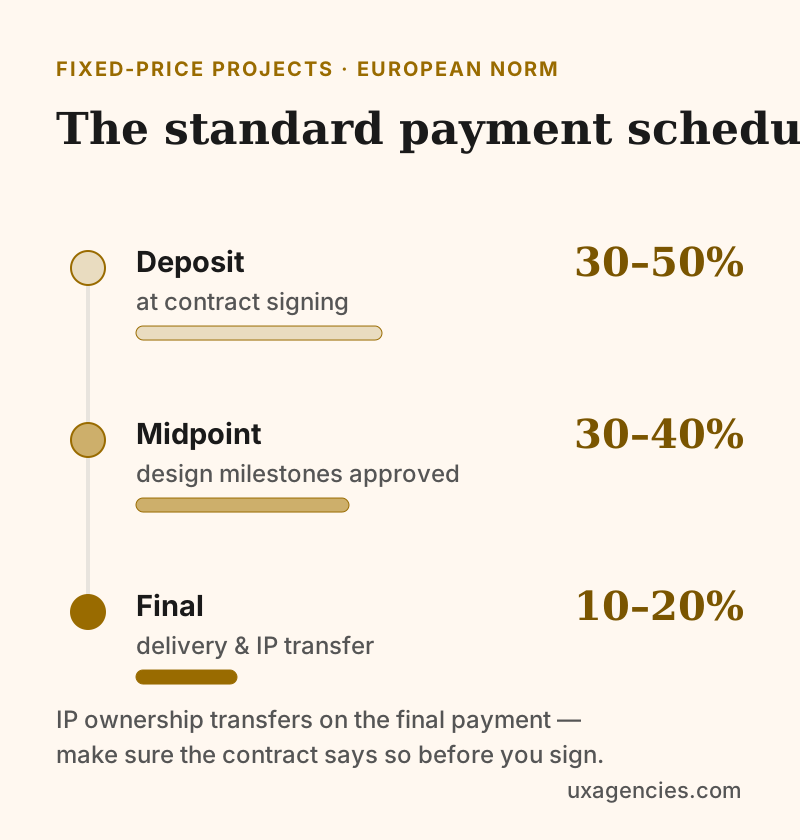
6. What is the standard payment schedule? Fixed price projects are typically: 30–50% upfront deposit, 30–40% at midpoint, and 10–20% upon final delivery.
7. Why are London agencies so expensive? London has higher living costs and salaries. You are also paying for the density of talent, access to global markets, and often a higher level of strategic business consulting included in the design process.
8. Can I use a US agency for my European company? Yes, but US agencies are typically 30–50% more expensive than Western European agencies ($150–$250/hour).
9. How long does a UX project take? Small projects: 4–6 weeks. Medium projects: 3–4 months. Large digital transformations: 6–12 months.
10. What if I don't like the design? This is why you have "checkpoints" or milestones. You should see mood boards and wireframes early. If you dislike the direction, you pivot before high-fidelity design begins.
11. Do I own the design files? Yes. Always ensure your contract states that IP (Intellectual Property) transfers to you upon final payment. You should receive the open Figma/Sketch files, not just PNGs.
12. What is a UX audit and how much does it cost? A UX audit is a professional review of your existing product to find usability issues. It costs between €3,000 (basic heuristic review) and €25,000 (comprehensive audit with user testing).
Next Steps: Making Your Decision
You now have the data. The fog of pricing should be clearer. Here is your decision framework:
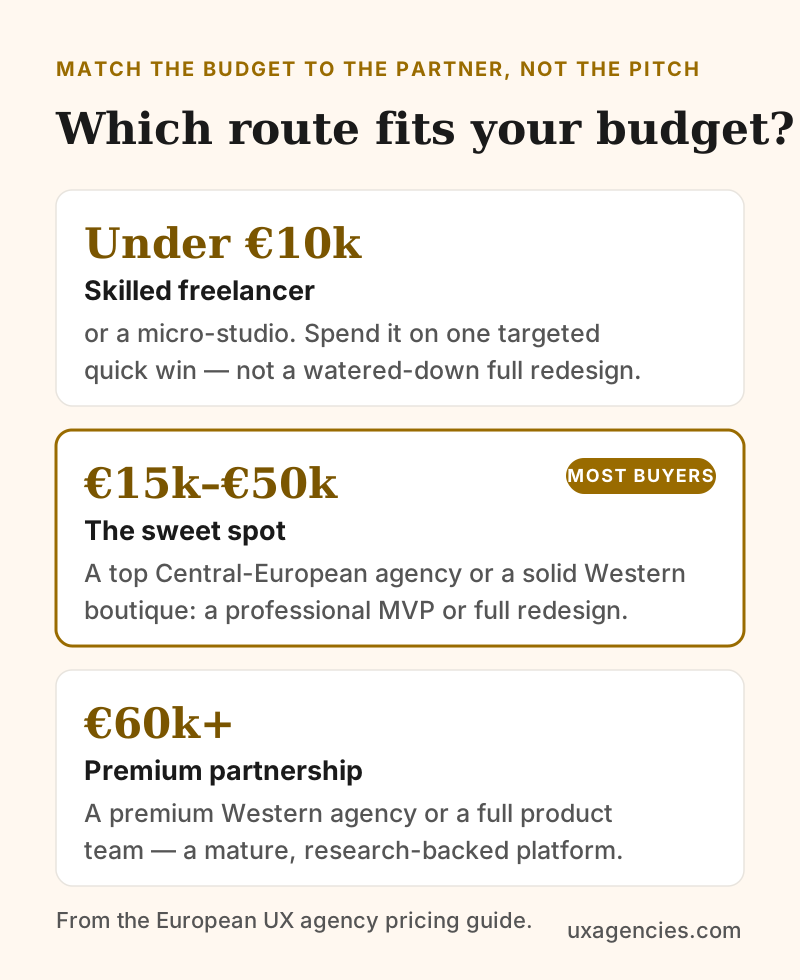
- If your budget is <€10,000: Hire a skilled freelancer or a very small boutique studio. Focus on a specific "Quick Win" rather than a full redesign.
- If your budget is €15,000 – €50,000: You are in the "Sweet Spot." You can hire a top-tier Eastern European agency or a solid Western European boutique. This gets you a professional MVP or website redesign.
- If your budget is >€60,000: You can afford a premium Western European agency or a comprehensive product team in Eastern Europe to build a mature, tested platform.
Warning on Timelines: The top 10% of agencies in our directory are typically booked 2–3 months out. If you need to launch in 2 months, you need to be talking to them this week.
Ready to start? Choose your path:
🚀 The Fast Track (Recommended)
Get matched with 3 vetted agencies in 2 minutes → Best for budgets €15k+. Tell us your specs, and we'll hand-pick 3 agencies that are available now and fit your price range. Commission-free service.
🛠️ The DIY Track
Browse the full Directory → Filter by "Hourly Rate" or "Cities" to do your own research.
📄 The Preparation Track
Download the RFP Toolkit → Get our templates to prepare your project brief before contacting anyone.
The cost of bad design is always higher than the cost of good design. Choose wisely.
Continue your research: